

If your students can write sentences but struggle to turn those sentences into a clear paragraph, you’re not alone. For many second and third graders, paragraph structure feels abstract and hard to remember—especially once they’re in the middle of writing. That’s why teaching paragraph structure before drafting is so important.
One of the most effective ways I’ve found to help students understand and remember the parts of a paragraph is through a movement-based chant. This simple routine makes paragraph structure concrete, memorable, and fun—and it gives students a tool they can rely on when they’re writing independently.
Before introducing the chant, it’s important to ground students in a clear, age-appropriate definition.
I tell my students:
A paragraph is a group of sentences that tell about one main idea.
This definition is simple, accurate, and easy for students to repeat. It sets the stage for understanding why paragraphs have specific parts and how those parts work together.
Paragraphs ask students to juggle multiple skills at once:
That’s a lot for young writers. When paragraph structure is only taught verbally or through worksheets, many students forget it the moment they start writing. A chant paired with movement gives students something physical to anchor their thinking.
This chant works best right before drafting, during writing warm-ups, or anytime students need a quick reminder of paragraph structure.
Before starting, I say:
“A paragraph is a group of sentences that tell about one main idea. Let’s review the parts of a paragraph together.”
Then we chant:
A paragraph starts with a Topic Sentence.
👉 ACTION: Students stand and point both hands above their head.
Which has the Big Idea!
👉 ACTION: Hands stay up; fingers “explode” outward.
With 3 Supporting Details.
👉 ACTION: Point to shoulders, tummy, and hips.
And ends with a Con-clu-sion!
👉 ACTION: Stomp feet with each syllable (3 stomps).
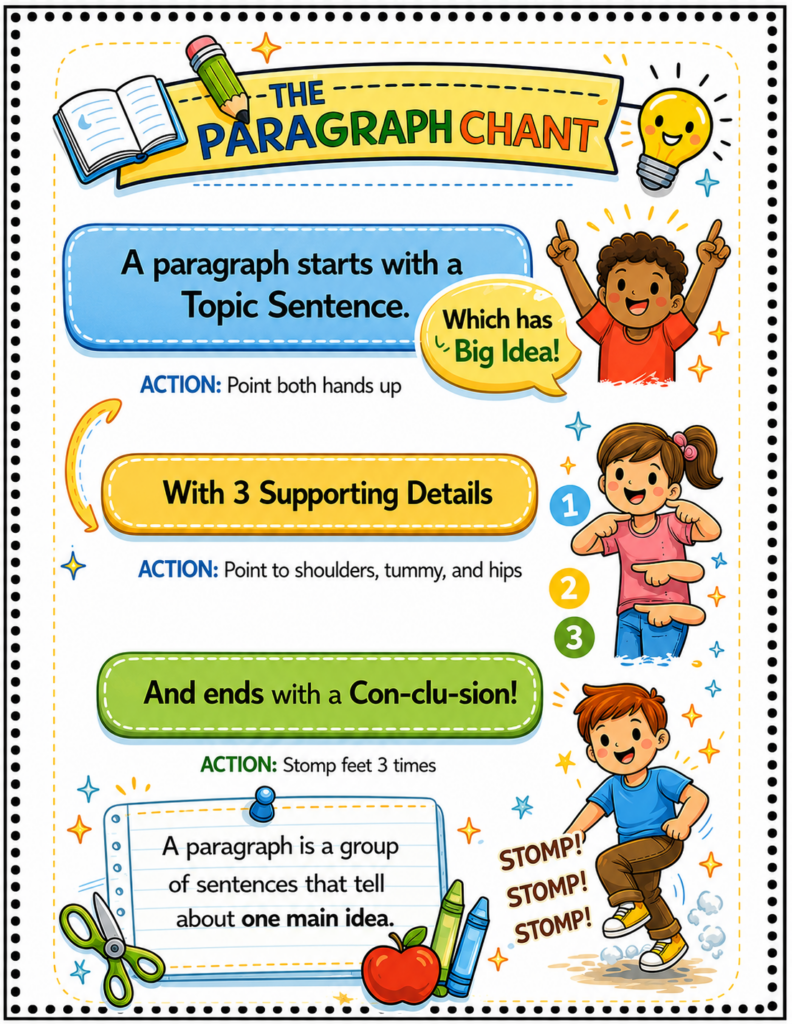
The entire chant takes less than a minute, but the impact lasts far longer. Students begin to internalize the structure and often quietly act it out or whisper it to themselves while writing.
This chant is effective because it:
Instead of asking students to remember abstract terms like topic sentence and conclusion, the chant gives them a physical roadmap they can return to anytime.
This chant is flexible and can be used in many ways:
It’s especially helpful for students who rush through paragraphs or skip key parts.
To reinforce the chant, I often follow it with a cut-and-paste activity where students build a paragraph by placing the parts in order. Using visuals that match the chant movements helps solidify understanding.
Other easy extensions include:
These activities keep instruction active and meaningful.

Once students understand paragraph structure through the chant, they’re much more prepared to move into drafting. When they later use a paragraph graphic organizer or write a rough draft, the chant serves as a built-in checklist:
This connection makes drafting feel manageable instead of overwhelming.
Teaching paragraph structure doesn’t have to be complicated. A simple chant—paired with clear language and movement—can transform how students approach writing. When students understand what a paragraph needs before they write, everything that comes next becomes easier.
If you’re looking for a way to make paragraph structure stick, this chant is a powerful place to start.
If you’re ready to bring this chant into your classroom, grab the free Paragraph Writing Toolkit below. It includes the chant poster and cut-and-paste activity to help students understand paragraph structure with confidence. It also contains many tools for teaching the writing process to 2nd and 3rd graders.
Strong paragraph writing begins with understanding structure. When students know what a paragraph is and what it needs, writing feels clearer and more manageable. A simple chant—paired with movement and visuals—gives students a concrete way to remember topic sentence, supporting details, and conclusion long after the lesson ends. Paragraph structure doesn’t have to be complicated; it just needs to be taught in a way that sticks.
If you enjoyed this post on teaching paragraph structure, you may also like these writing resources:
Paragraphs in the Writing Process
Paragraph Writing Resources for Every Month
 Save These Pre-Writing Ideas for Later!
Be sure to save this post if you’d like to come back to it later. Just pin one of the images below to your favorite writing instruction or 2nd & 3rd grade ELA board. You’ll be able to quickly find this post when you’re looking for simple, effective ways to teach paragraph structure in your classroom.

If you would like more resources for teaching the writing process, check out this unit:
