Do you have students struggling to master basic math facts? Do you have many resources but need to find a way to differentiate them for your students? Timed tests can help you with that. Read on to determine if timed tests need to be an essential part of your math fact fluency program.
What is Math Fact Fluency and Why is it Important?
Math fact fluency is the ability to quickly recall basic math facts. It is more than memorization of facts. Students cannot be fluent without conceptual understanding and flexible thinking!
Math facts fluency leads to higher-order mathematics. Through automaticity, students free up their working memory and can devote it to problem-solving and learning new concepts and skills.
Since a lack of fluency in basic math facts will significantly hinder a child’s future progress in problem-solving, algebra, and higher-order math concepts the Common Core Standards require us to ensure that our students are fluent in their math facts.
Let’s look at what an effective math fact fluency program needs to contain accomplish this.
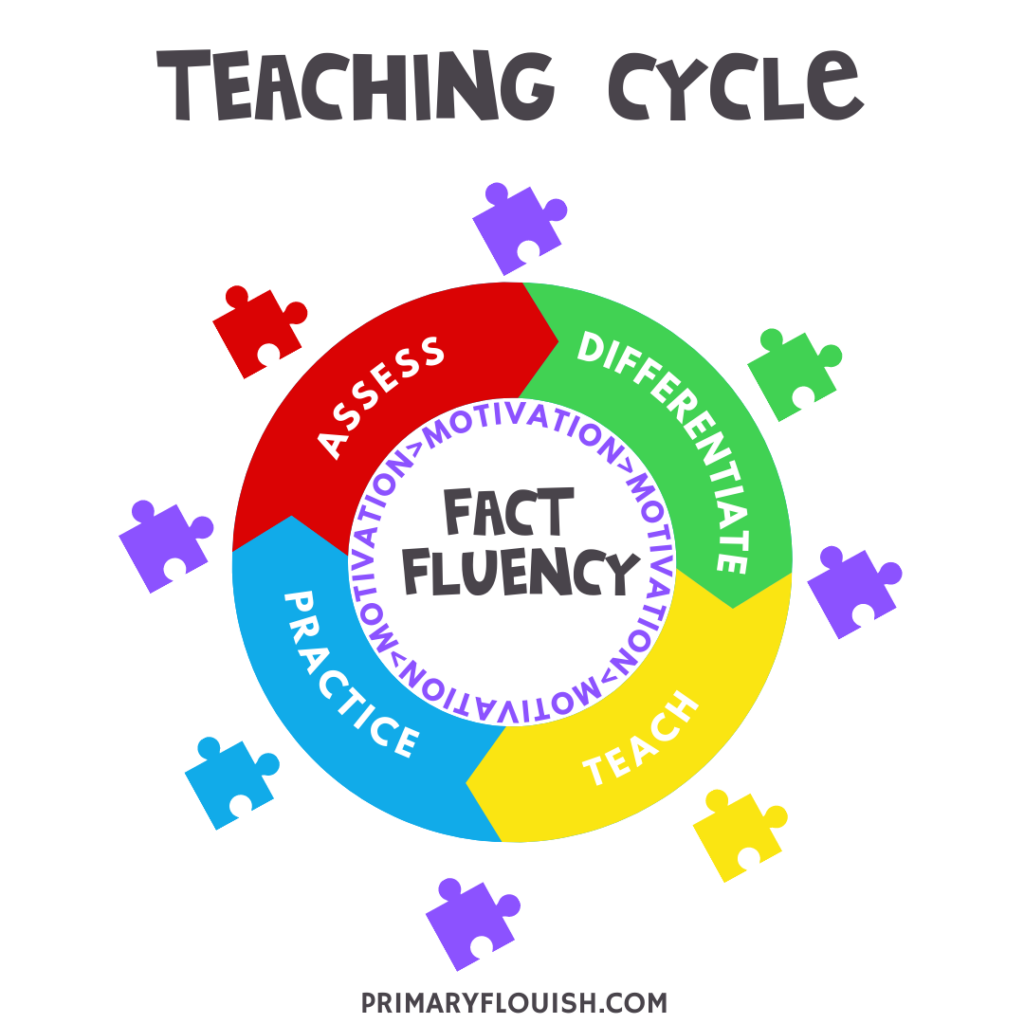
Four essential components:
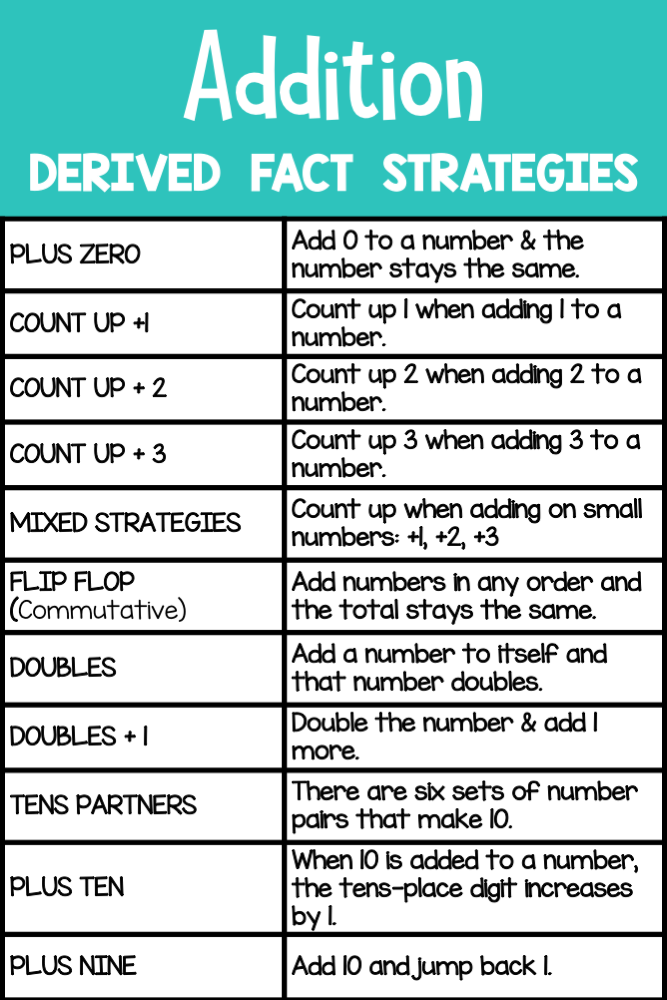
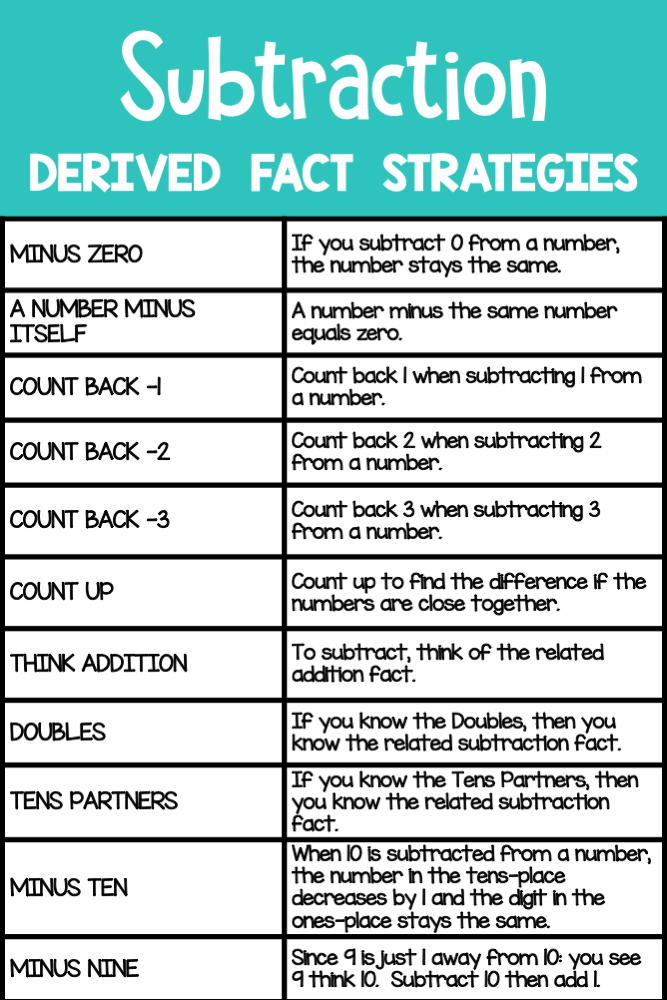
TEACH strategies & concepts
PRACTICE that is engaging & differentiated
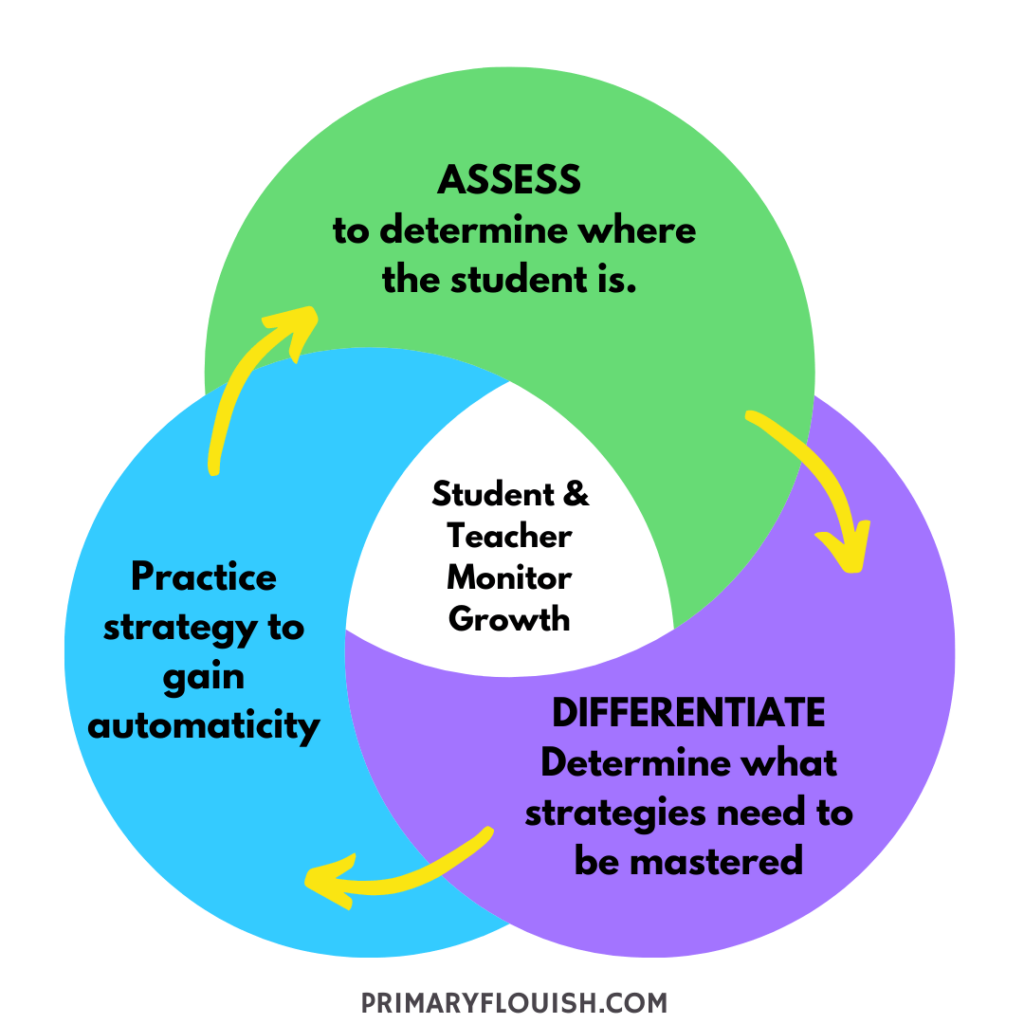
ASSESS student mastery so you can…
DIFFERENTIATE practice and instruction
Why Use Timed Tests to Promote Math Fact Fluency
There are some conflicting opinions about the use of timed tests for math fact fluency instruction. We are going to look at two of them:
Opinion 1: Timed tests are the major contributor to student stress in math.
My Response: they do IF used as a grade. However, if timed tests are used to inform the student and teacher on specific strategies to practice further, they can be very motivating.
Opinion 2: Assessments should assess understanding of strategies and number sense.
My Response: Assessments can be an effective tool to assess strategies if the assessment uses the strategies as the content.
Timed tests can be an essential part of an effective math fact fluency program because they reveal:
where the student is
where the student needs to be
Then we can partner with the students to choose ways to close the gap.
Assessments play a crucial role in an effective math facts fluency program when we use them to increase student awareness and provide us with the needed information to differentiate our instruction and the student’s independent practice content.
So let’s look at how we can use timed tests effectively.
How to Use Timed Tests to Promote Math Fact Fluency
1) Assess What We Teach
We must remember that we assess what we teach. If we are teaching individual strategies (which we should be), then we need to assess the unique strategy individually.
Our assessments will then need to focus on one strategy at a time.
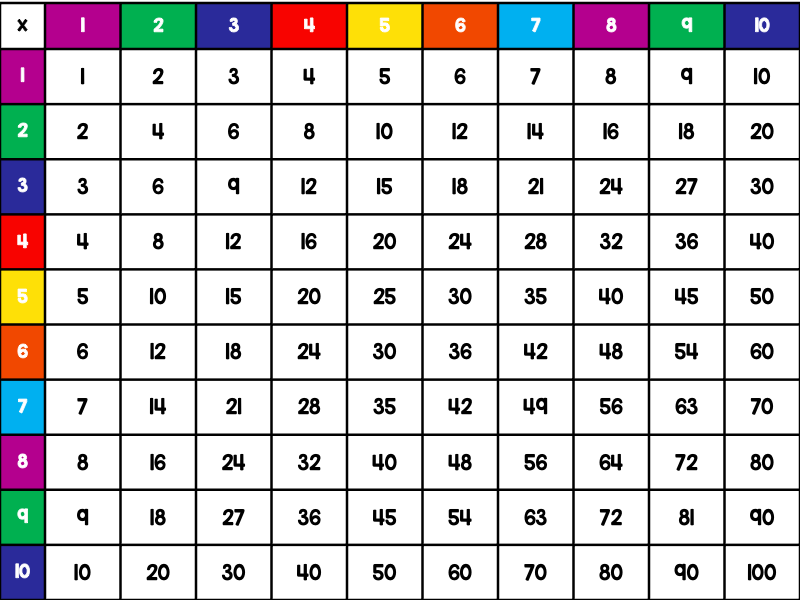
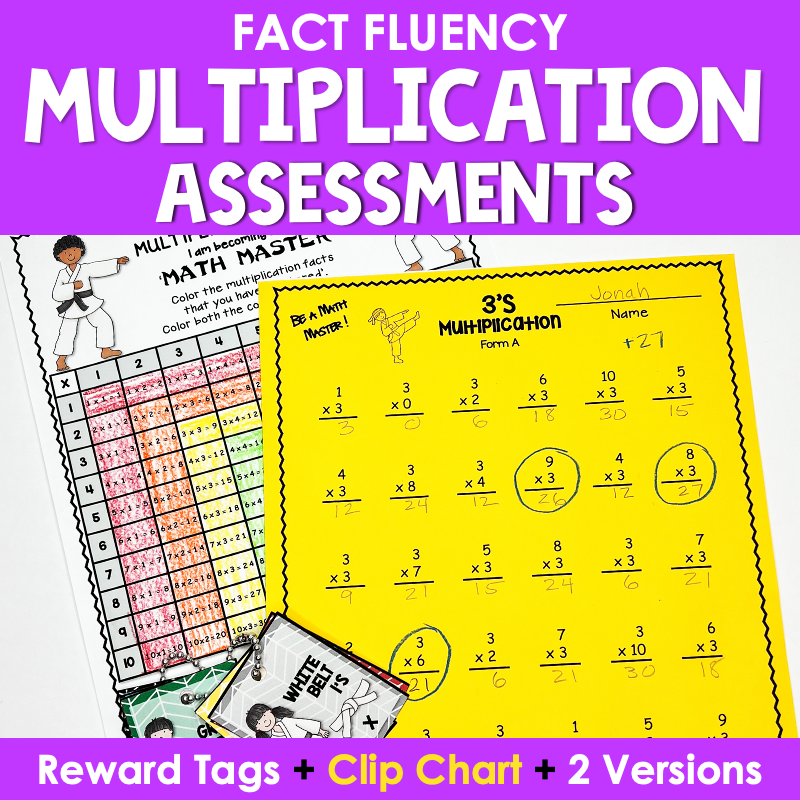
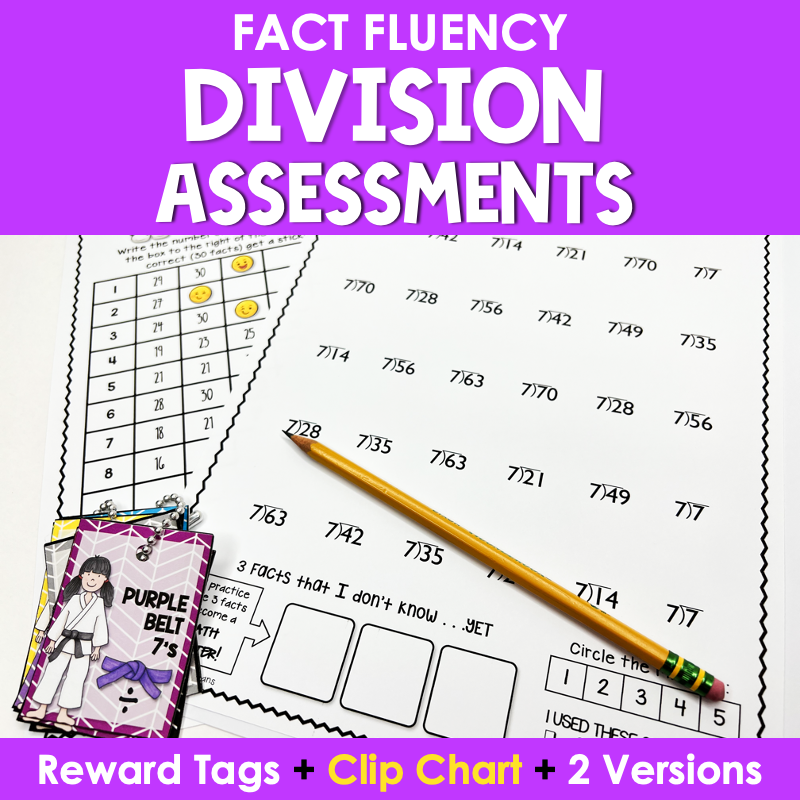
After multiplication and division have been introduced conceptually, students are ready to focus on practicing the individual tables.
So assessments for these would only contain facts in that table. Not a page filled with many different tables. Then we and our students have the necessary information to make a learning plan.
2) Nurture a Growth Mindset
Teaching a growth mindsetcreates the motivation and capacity to learn new things…
'Making mistakes really helps you learn, because your brain keeps trying new things and S-T-R-E-T-C-H-I-N-G until you figure out the answer to your problem.'
What a great way to look at mistakes! Not something to be hidden, ‘red-x’ed,’ or ashamed of, but something to be celebrated! Mistakes mean that we are learning! Our brains actually ‘light up’ with neuro-activity when we make a mistake!
So we need to continually remind our students that mistakes are helpful and show us what we want to focus on to achieve mastery of the math facts.
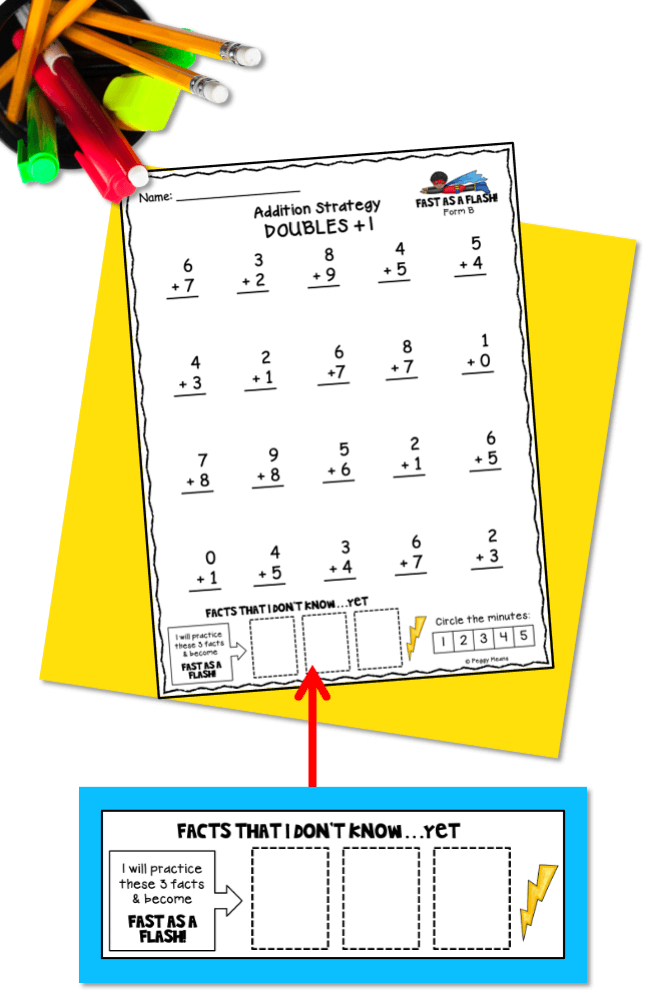
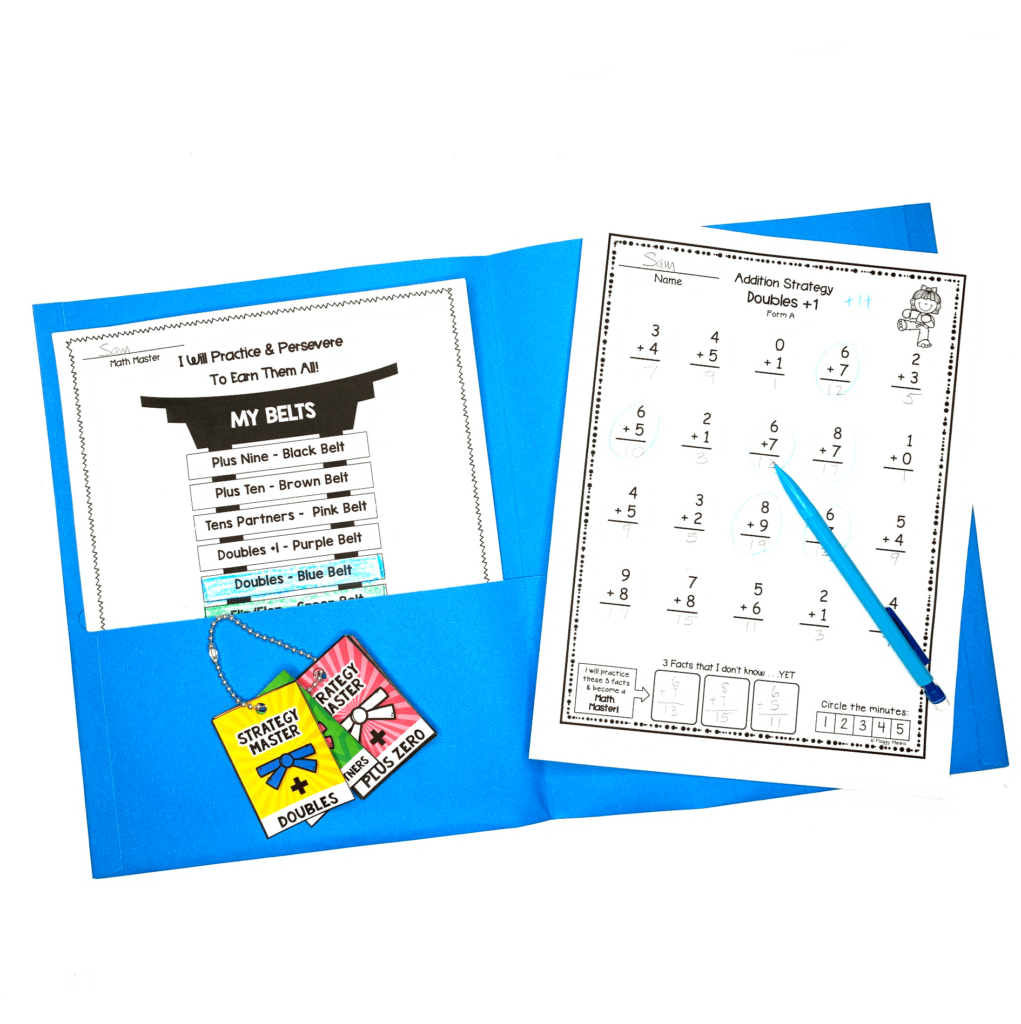
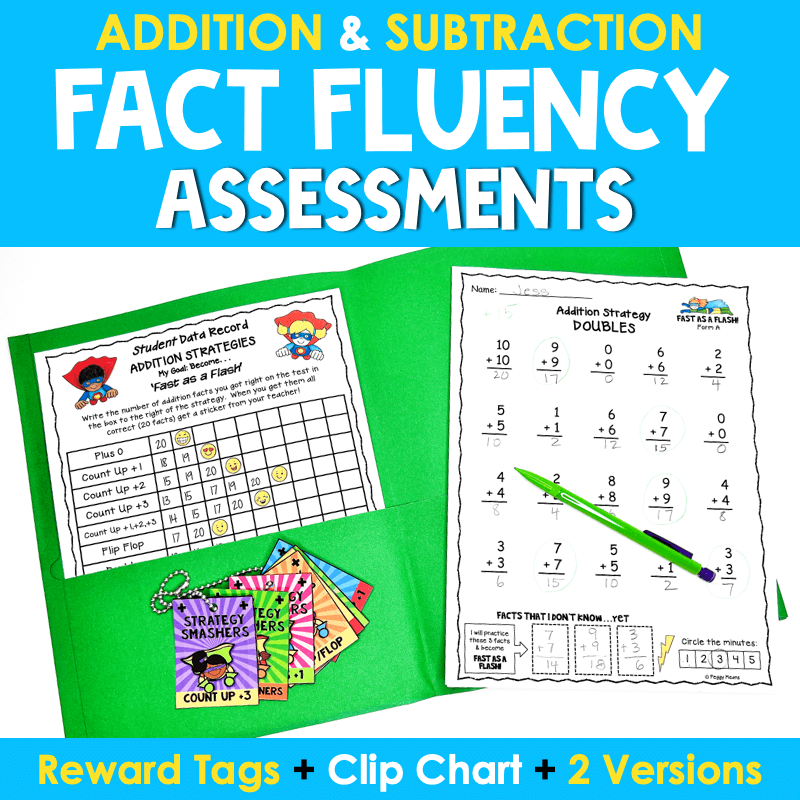
On this Addition assessment, you can see an easy way to transform a timed test into a learning opportunity. Students tap in the ‘power of yet’ and choose 3 facts that they intend to practice.
Students find this activity encouraging and inspiring!
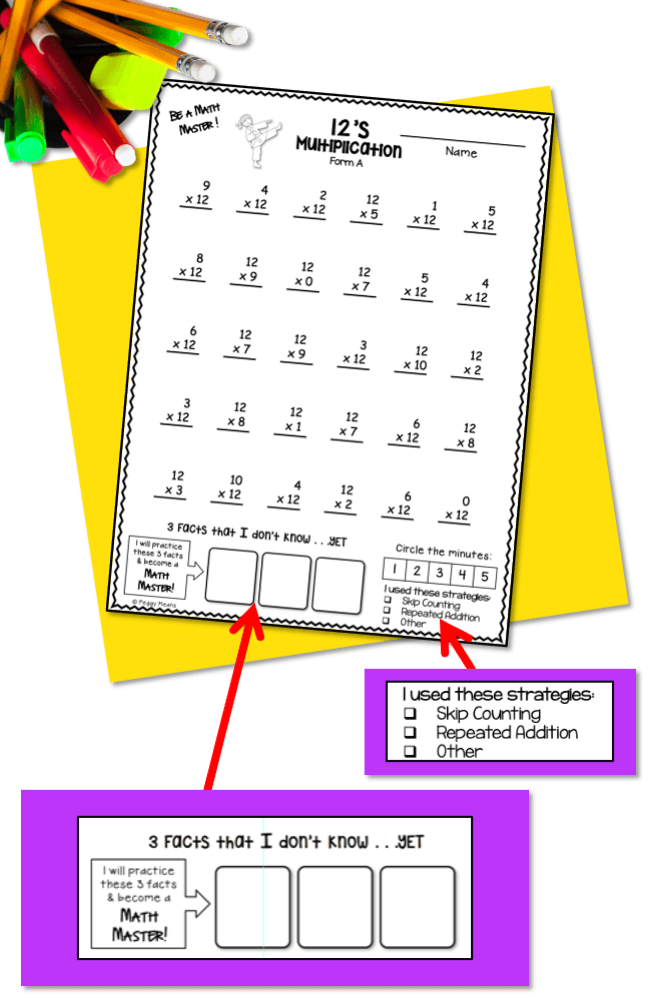
These multiplication timed tests (and the companion division tests) give two opportunities to develop a growth mindset:
1). ‘I used these strategies’
This section encourages students to reflect on the strategies that they used to solve the math facts (metacognition)
2. ‘3 Facts that I don’t know …YET’
Students choose 3 facts that they will practice. Great way to teach students to take responsibility for their learning.
3) Add a Motivational Componet
Mastering basic math facts can be very challenging and frustrating to many of our students. Some extrinsic motivation may give them the desire to put the effort in.
Mastering basic math facts can be very challenging and frustrating to many of our students. Some extrinsic motivation may give them the desire to put the effort in.
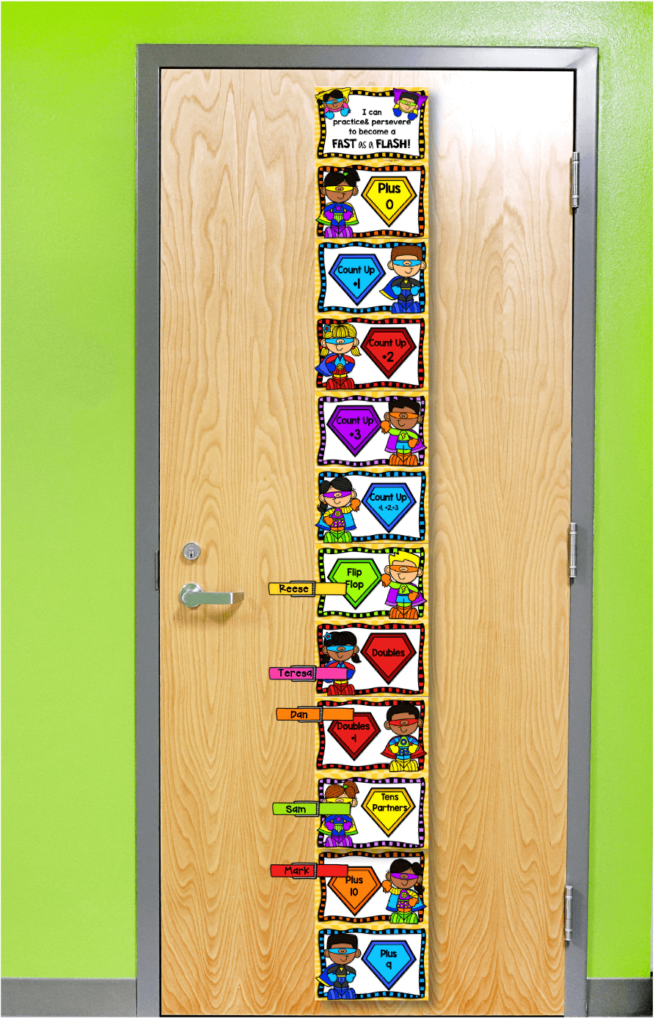
SUPERHERO CLIP CHART
Use a clip chart to add some excitement and motivation for mastering addition strategies!
You will be amazed when your students practice hard to earn a new ‘Shield’ level!
Look below for the link to get this fun clip chart for FREE!
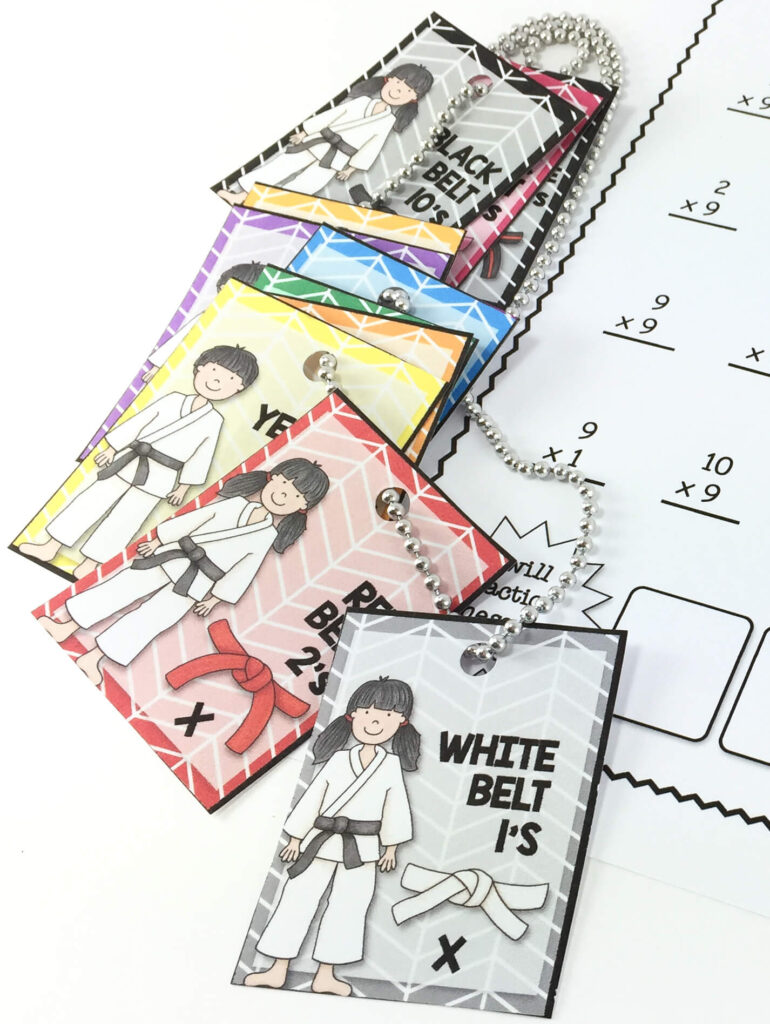
Students LOVE to earn Karate belts as they master each addition and subtraction strategy, as well as multiplication and division facts!
What Type of Timed Tests Should I Use?
I’m so glad you asked. (wink)
Since all teachers do not have the same student needs and resources, I have created and used 3 types of timed math fact tests.
Paper & Pencil
Boom
TpT Easel
Let’s look advantages and disadvantages of each type.
1) Paper & Pencil Printables
This is a form that most teachers used before the availability of digital options.
ADVANTAGES:
Students have the opportunity to reflect on their progress and set goals to practice.
Teachers have more time to reflect as they check student responses.
Students don’t need a device
DISADVANTAGES:
Students don’t get instant feedback on their responses.
Teachers have to spend time checking student answers.
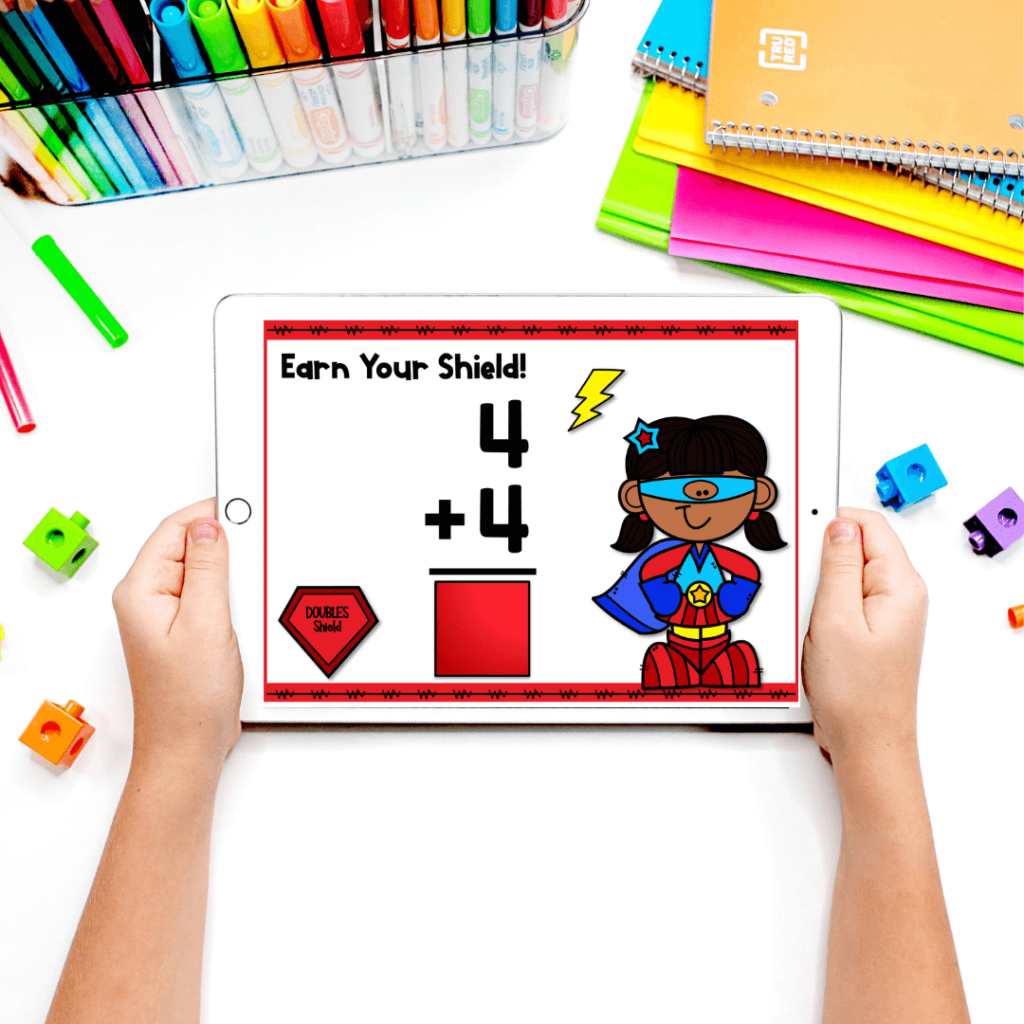
2) Boom Cards on Boom Learning
Boom Cards are an excellent option for teachers, both in-person and distance learning.
ADVANTAGES:
NO PREP: Teachers do not need to print any papers.
Teachers don’t have to grade any papers!
Students get instant feedback on every response.
Students do not progress to the next fact until they answered correctly.
Engaging graphics
Facts are presented in random order
DISADVANTAGES:
Teachers need to have a Boom Learning account.
Students need a device
Many teachers agree that timed tests are an essential component of an effective math facts fluency program for all these reasons!
The timed tests that I created will motivate and encourage students. My timed tests also assess the specific strategies that each student needs to master.
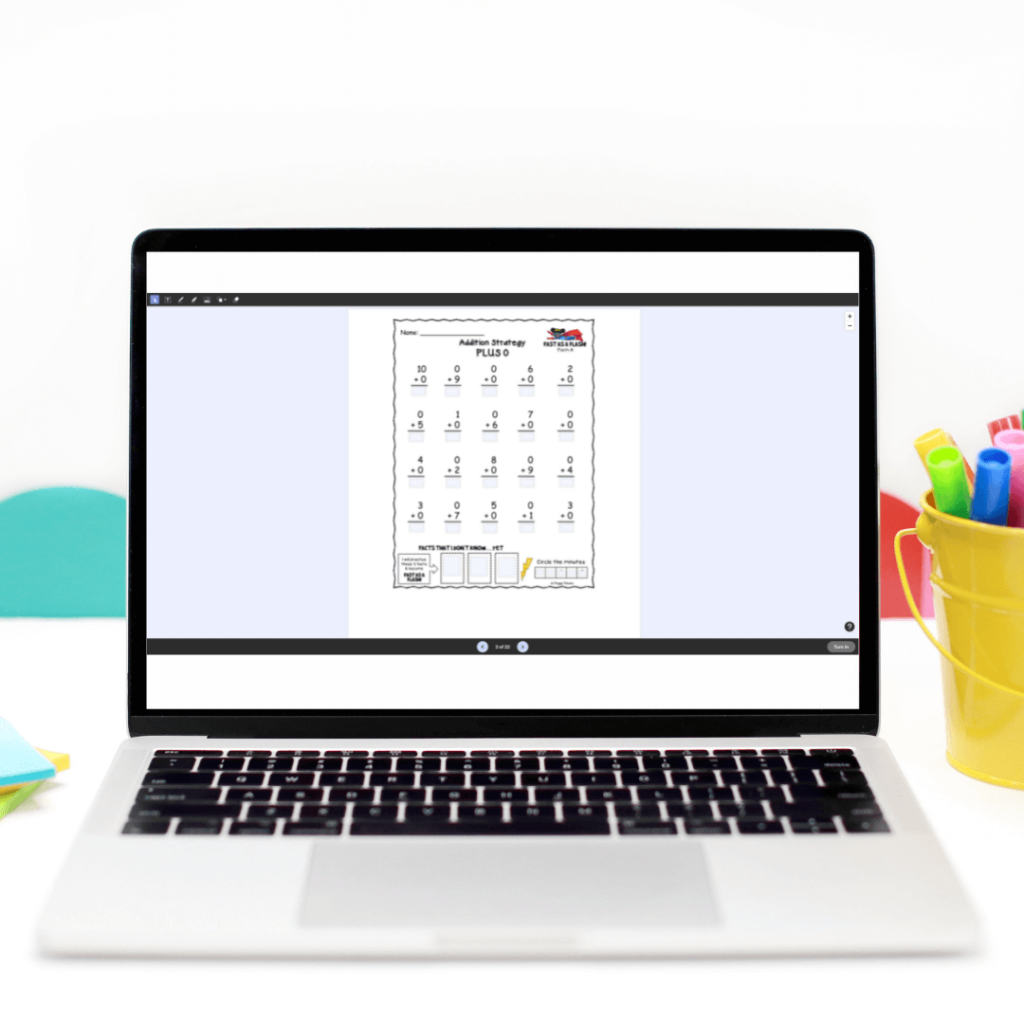
3) Easel by Teachers Pay Teachers
Teachers Pay Teachers have recently added a digital option right on their site.
ADVANTAGES:
NO PREP: Teachers do not need to print any papers
Teachers do not need an additional program for the assessments to run on.
Free with my printable timed tests.
DISADVANTAGES:
Students don’t get instant feedback on their responses.
Teachers have to spend time checking student answers.
Difficult to determine the time spent students used.
Students need a device.
Read what teachers like you are saying about these timed math fact fluency tests.
This is just what I needed to reach each child at their level. The kids love it!
Mary
My students love collecting belts as a motivation to learn their multiplication facts. We make it a class celebration each time a student earns a belt. They get so excited whenever they earn one and it has taken a lot of the stress away from learning multiplication facts.
Christina
My students have fallen in love with these. They are always trying to get their next "belt."
April
Motivate your students to master Addition Facts with this colorful superhero clip chart!
Your students will be so excited to earn their ‘SHIELDS’ and move their clips as they master Addition Strategies!
Sign up below to get the Clip Chart NOW!
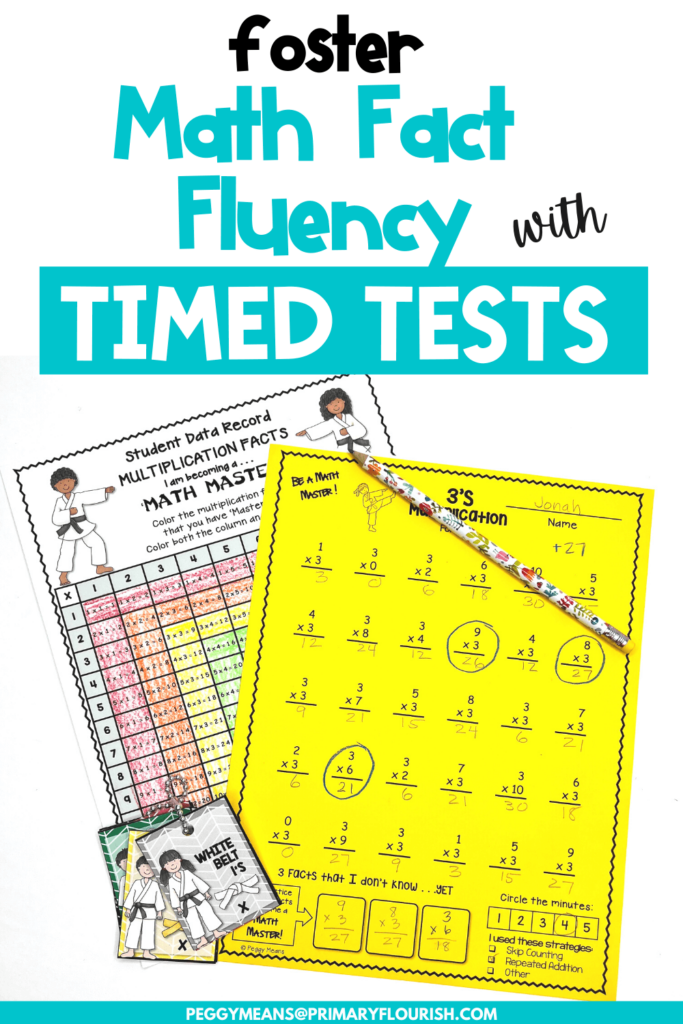
Pin the image below to revisit this post later!
Cookie Notice
We use cookies on our website to give you the most relevant experience by remembering your preferences and repeat visits. By clicking “Accept”, you consent to the use of ALL the cookies.
This website uses cookies to improve your experience while you navigate through the website. Out of these cookies, the cookies that are categorized as necessary are stored on your browser as they are essential for the working of basic functionalities of the website. We also use third-party cookies that help us analyze and understand how you use this website. These cookies will be stored in your browser only with your consent. You also have the option to opt-out of these cookies. But opting out of some of these cookies may have an effect on your browsing experience.
Necessary cookies are absolutely essential for the website to function properly. This category only includes cookies that ensures basic functionalities and security features of the website. These cookies do not store any personal information.
Any cookies that may not be particularly necessary for the website to function and is used specifically to collect user personal data via analytics, ads, other embedded contents are termed as non-necessary cookies. It is mandatory to procure user consent prior to running these cookies on your website.